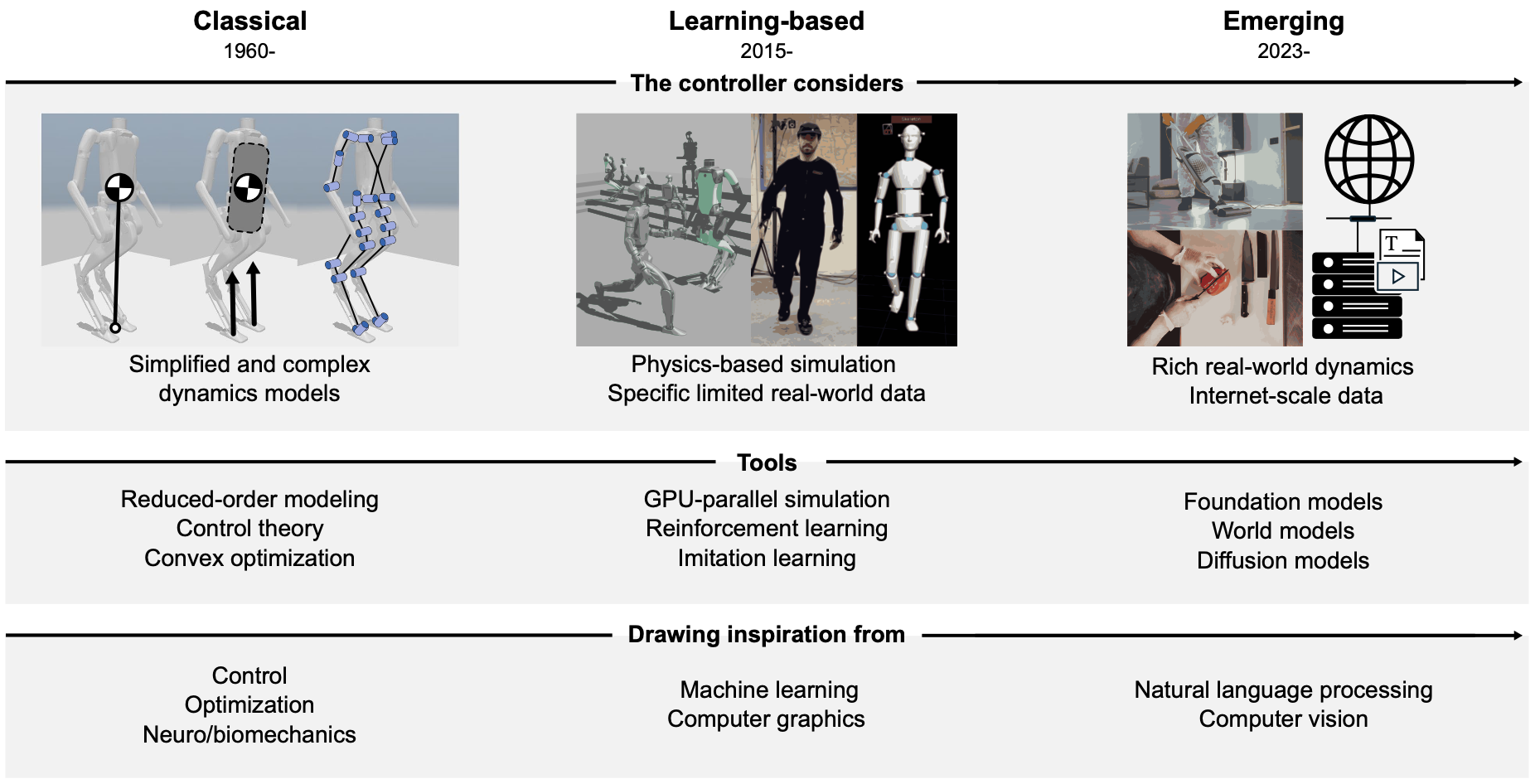
Evolution of Humanoid Locomotion Control
Science Robotics
TL;DR: A survey connects classical control, RL, and generative models, outlining a path toward physics-guided, adaptive, general-purpose humanoid control.
* denotes equal contribution and † denotes equal advising. Below are selected papers. The full publication list is here. Topic-wise selected papers can be found in the research topic page.
Evolution of Humanoid Locomotion Control
Science Robotics
TL;DR: A survey connects classical control, RL, and generative models, outlining a path toward physics-guided, adaptive, general-purpose humanoid control.
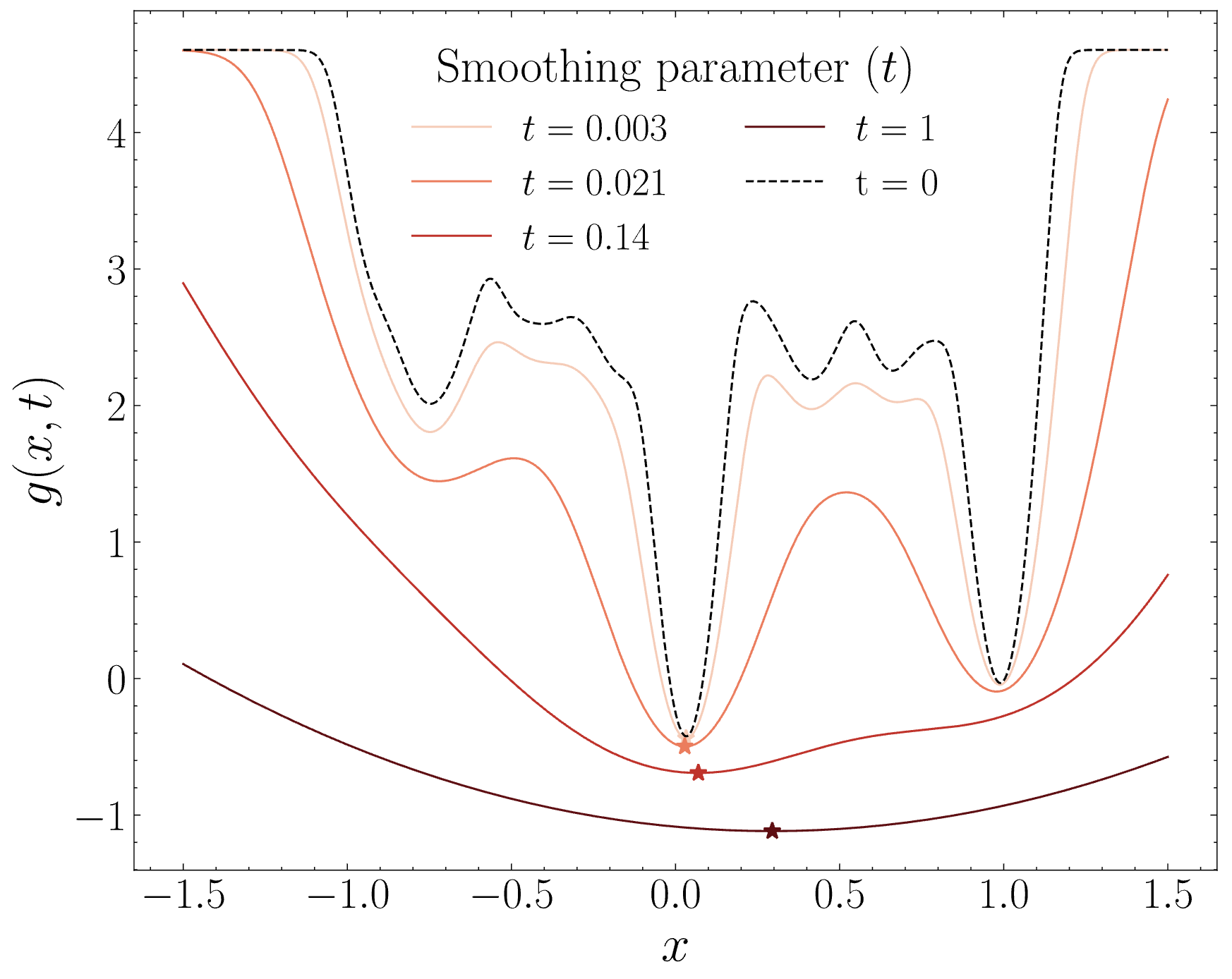
Global Convergence of Sampling-Based Nonconvex Optimization through Diffusion-Style Smoothing
Transactions on Machine Learning Research, 2026
TL;DR: Sampling-based optimizers (CEM, MPPI, etc) implicitly smooth nonconvex objectives; DIDA exploits this with diffusion-inspired annealing for global optimization.
FADA: Few-Shot Domain Adaptation via Dynamics Alignment for Humanoid Control
Conference on Robot Learning (CoRL), 2026
TL;DR: FADA enables few-shot real-world adaptation by separating planning from inverse dynamics, then fine-tuning only the inverse-dynamics module on a few real-world rollouts—without rewards, simulator fitting, or online RL.
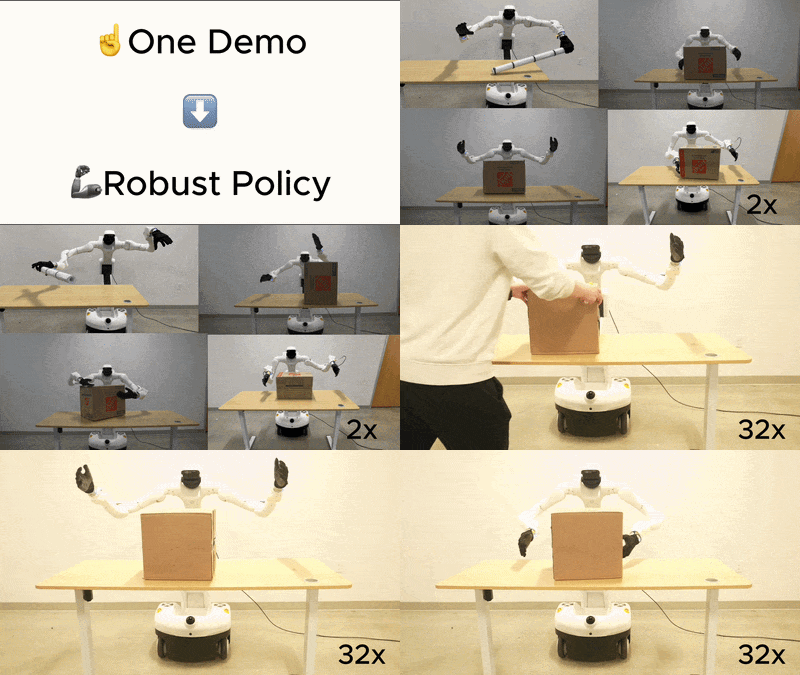
Worlds in One Demo: A Synthetic Data Engine for Learning Open-World Mobile Manipulation
Conference on Robot Learning (CoRL), 2026
TL;DR: WANDA turns a single real demo into diverse synthetic data for open-world mobile manipulation, enabling spatial, scene, and even zero-shot cross-embodiment generalization.
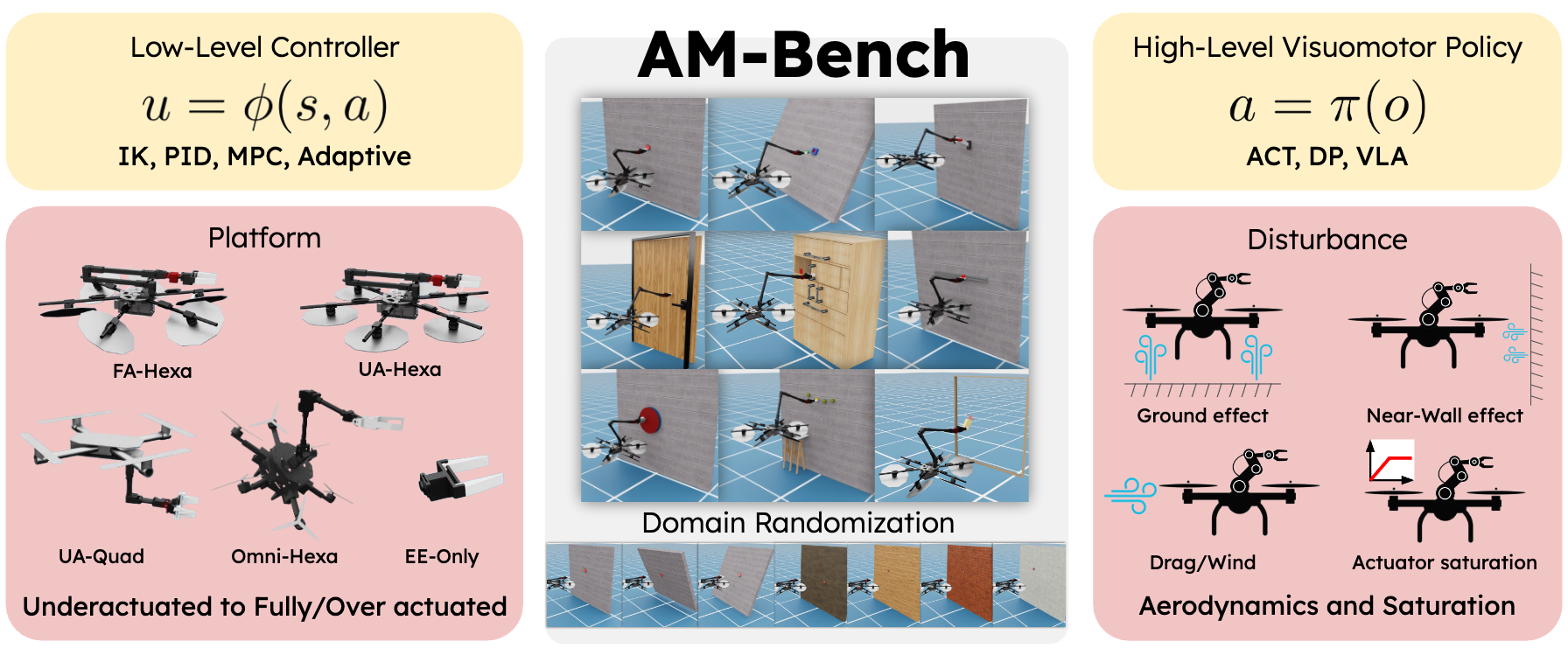
AM-Bench: A Modular Simulation Suite and Benchmark for Aerial Manipulation Policy Learning
Conference on Robot Learning (CoRL), 2026
TL;DR: A modular benchmark for aerial manipulation learning, jointly evaluating tasks, robot embodiments, low-level controllers, disturbances, and visuomotor policies.
VLK: Learning Humanoid Loco-Manipulation from Synthetic Interactions in Reconstructed Scenes
Conference on Robot Learning (CoRL), 2026
TL;DR: VLK learns humanoid loco-manipulation entirely from synthetic vision-language-kinematics data generated in reconstructed real-world scenes, enabling sim-to-real navigation and object transport without human demonstrations.
Scalable Behavior Cloning with Open Data, Training, and Evaluation
Conference on Robot Learning (CoRL), 2026
TL;DR: Open data, training, and infra for robotics. We release the largest teleop dataset (>3.5K hours, >130K episodes) to date, and extensively investigate training techniques.
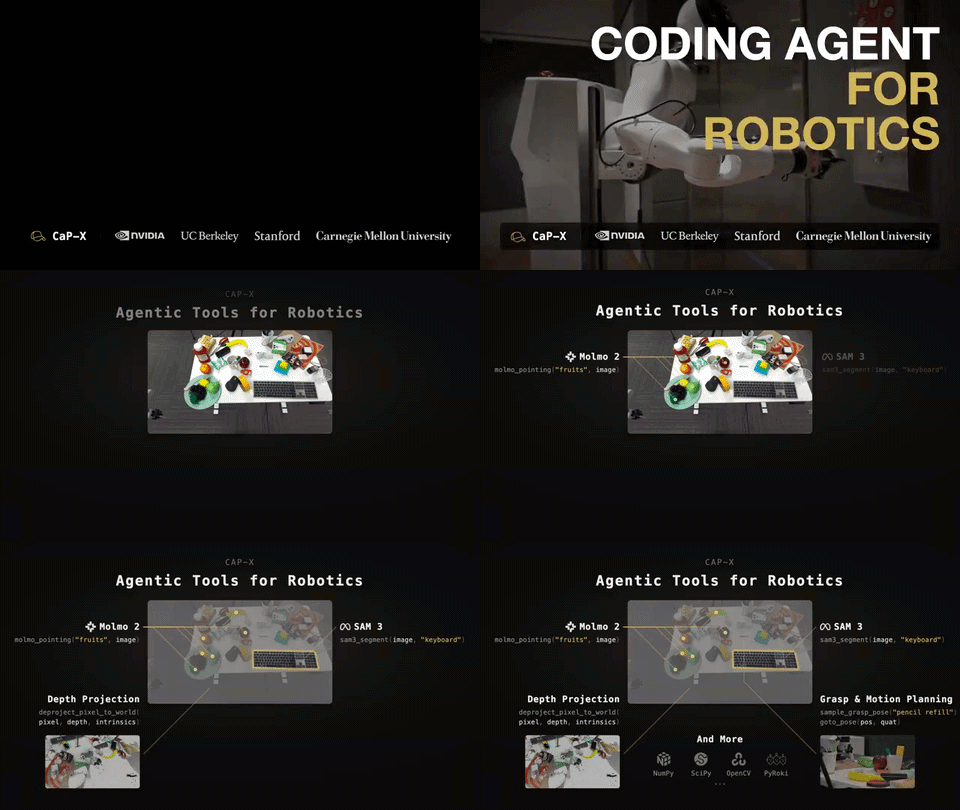
ENPIRE: Agentic Robot Policy Self-Improvement in the Real World
Conference on Robot Learning (CoRL), 2026
TL;DR: ENPIRE gives tool-calling coding agents a real-world feedback loop, enabling autonomous policy self-improvement to 99% success on dexterous manipulation tasks.
LUCID: Learning Embodiment-Agnostic Intent Models from Unstructured Human Videos for Scalable Dexterous Robot Skill Acquisition
Conference on Robot Learning (CoRL), 2026
TL;DR: LUCID separates human-video intent from sim-trained control, enabling scalable real-world dexterous manipulation across tasks and embodiments w/o any real robot data.
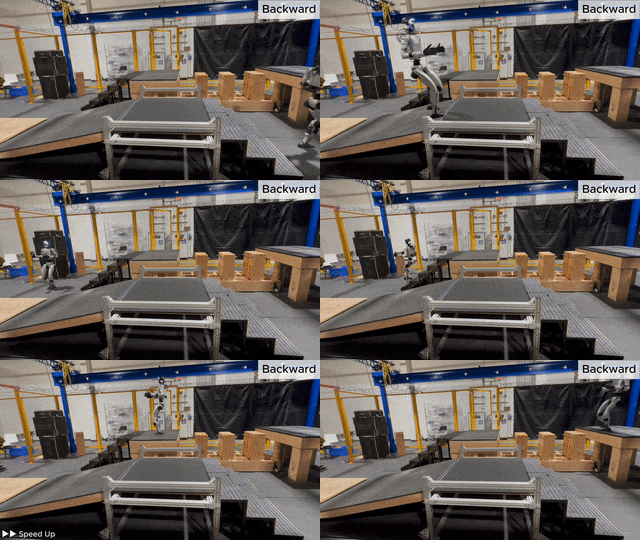
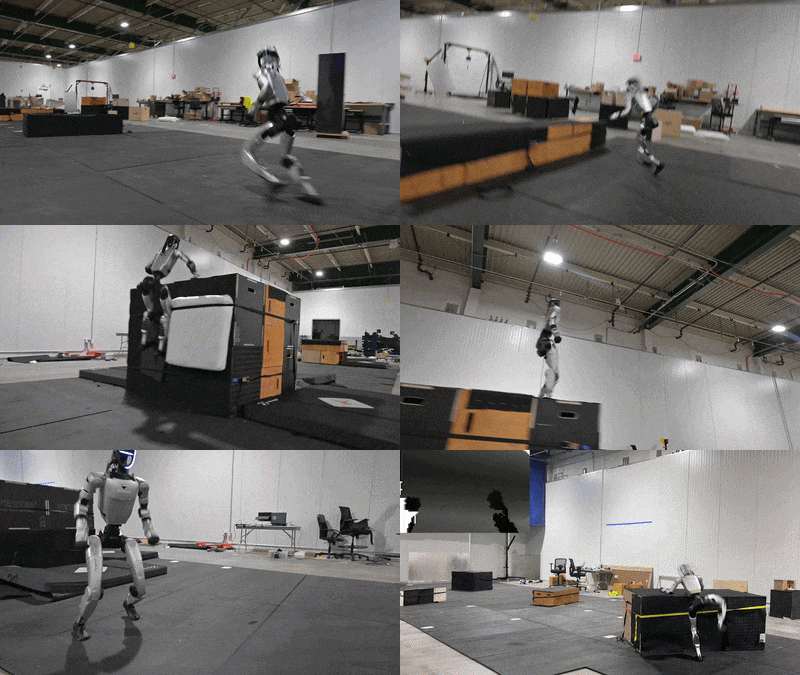
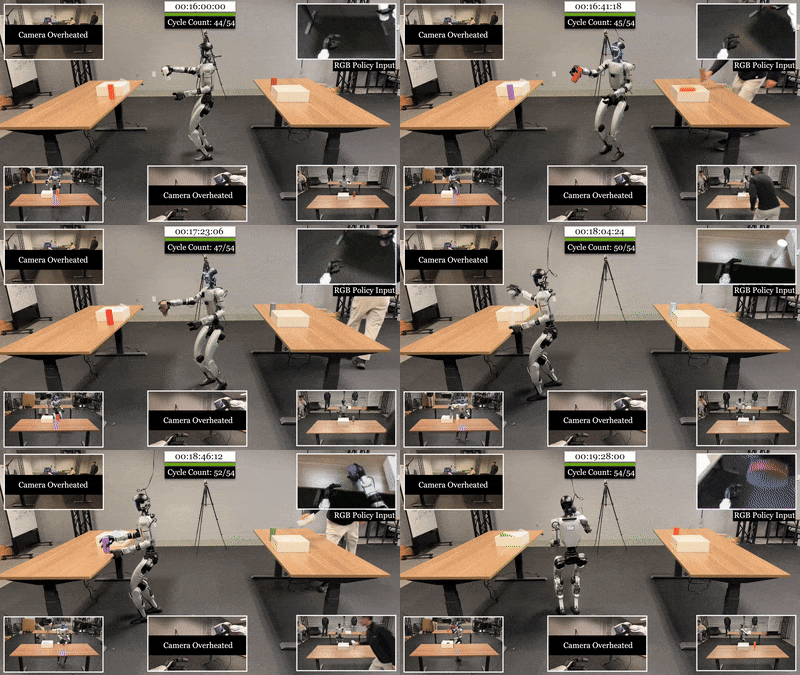
VIRAL: Visual Sim-to-Real at Scale for Humanoid Loco-Manipulation
IEEE / CVF Computer Vision and Pattern Recognition Conference (CVPR), 2026
TL;DR: VIRAL investigates the scaling law of visual sim-to-real and finds a recipe to achieve zero-shot, robust, and continuous real-world deployment.
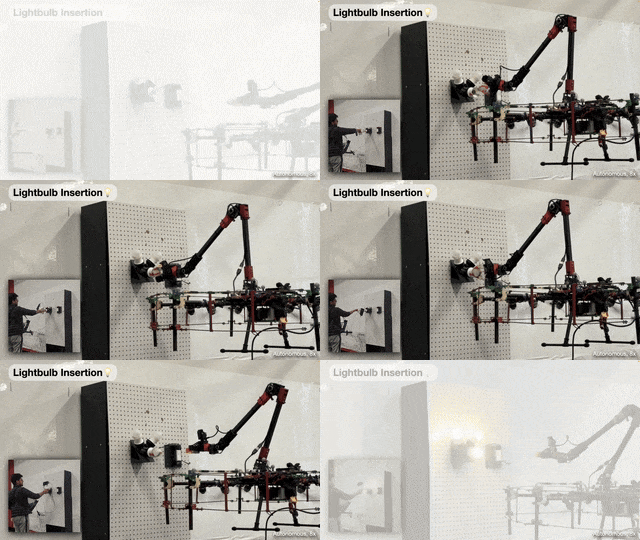
UMI-on-Air: Embodiment-Aware Guidance for Embodiment-Agnostic Visuomotor Policies
International Conference on Robotics and Automation (ICRA), 2026
TL;DR: EADP steers UMI's embodiment-agnostic diffusion policy using the gradient of the low-level controller's tracking cost for cross-embodiment.
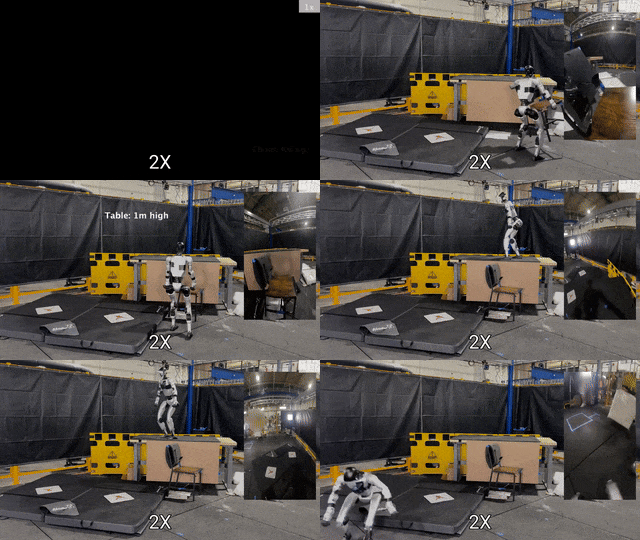
OmniRetarget: Interaction-Preserving Data Generation for Humanoid Whole-Body Loco-Manipulation and Scene Interaction
International Conference on Robotics and Automation (ICRA), 2026
(Best Conference Paper Award)
(Best Paper Award on Robot Manipulation and Locomotion)
TL;DR: High-quality interaction-preserving motion reference generation that enables agile whole-body skills with minimal RL tracking.
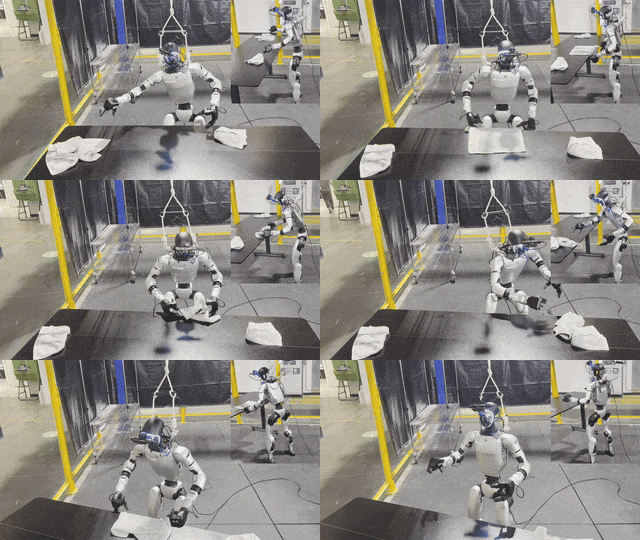
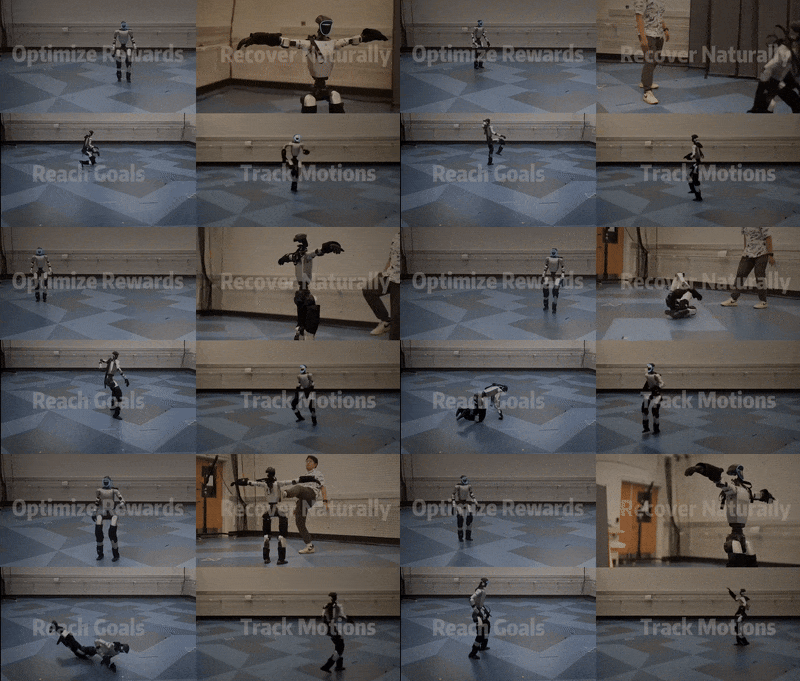
BFM-Zero: A Promptable Behavioral Foundation Model for Humanoid Control Using Unsupervised Reinforcement Learning
International Conference on Learning Representations (ICLR), 2026
TL;DR: BFM-Zero enables zero-shot goal reaching, tracking, and reward optimization (any reward at test time) from one policy.
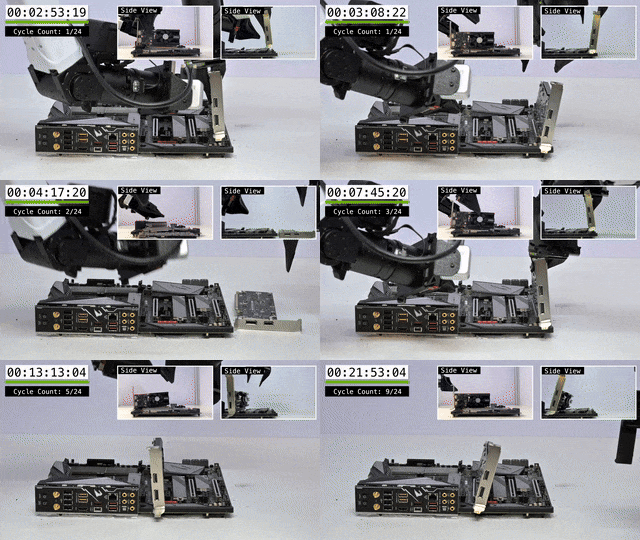
Self-Improving Vision-Language-Action Models with Data Generation via Residual RL
International Conference on Learning Representations (ICLR), 2026
TL;DR: Probe, Learn, Distill (PLD): On-policy probing from a base VLA model + off-policy residual RL + distillation for VLA post-training.
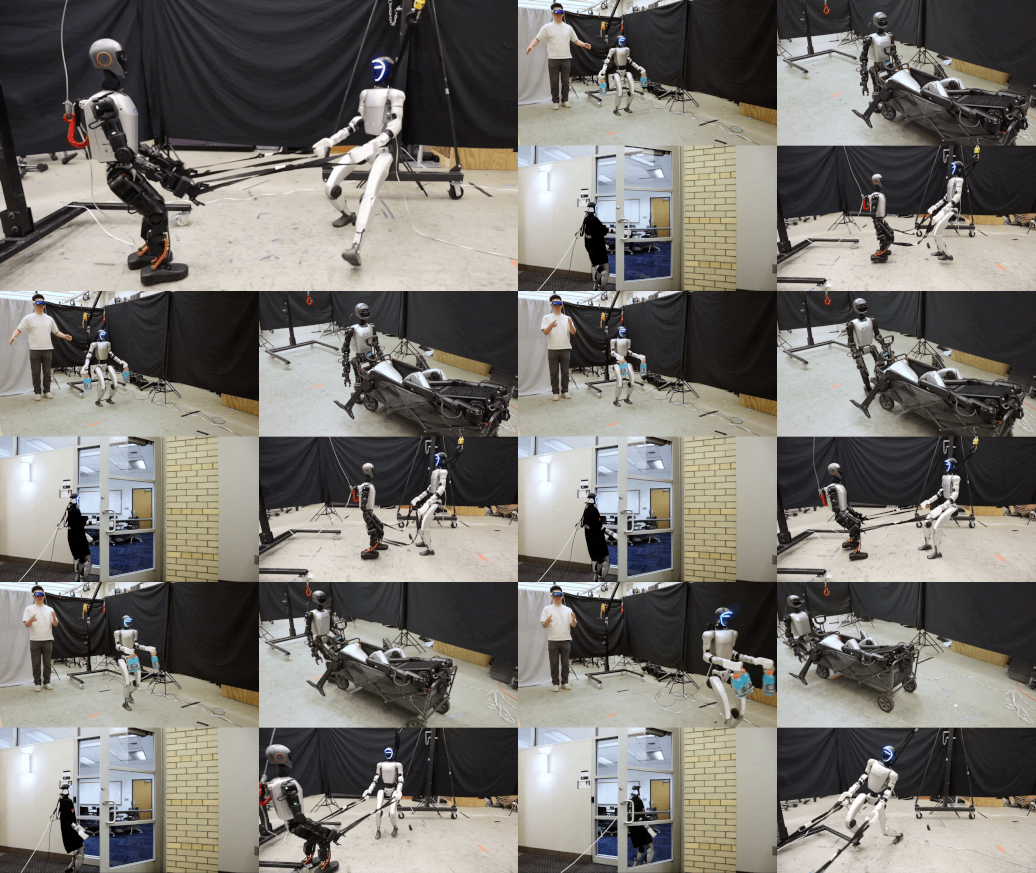
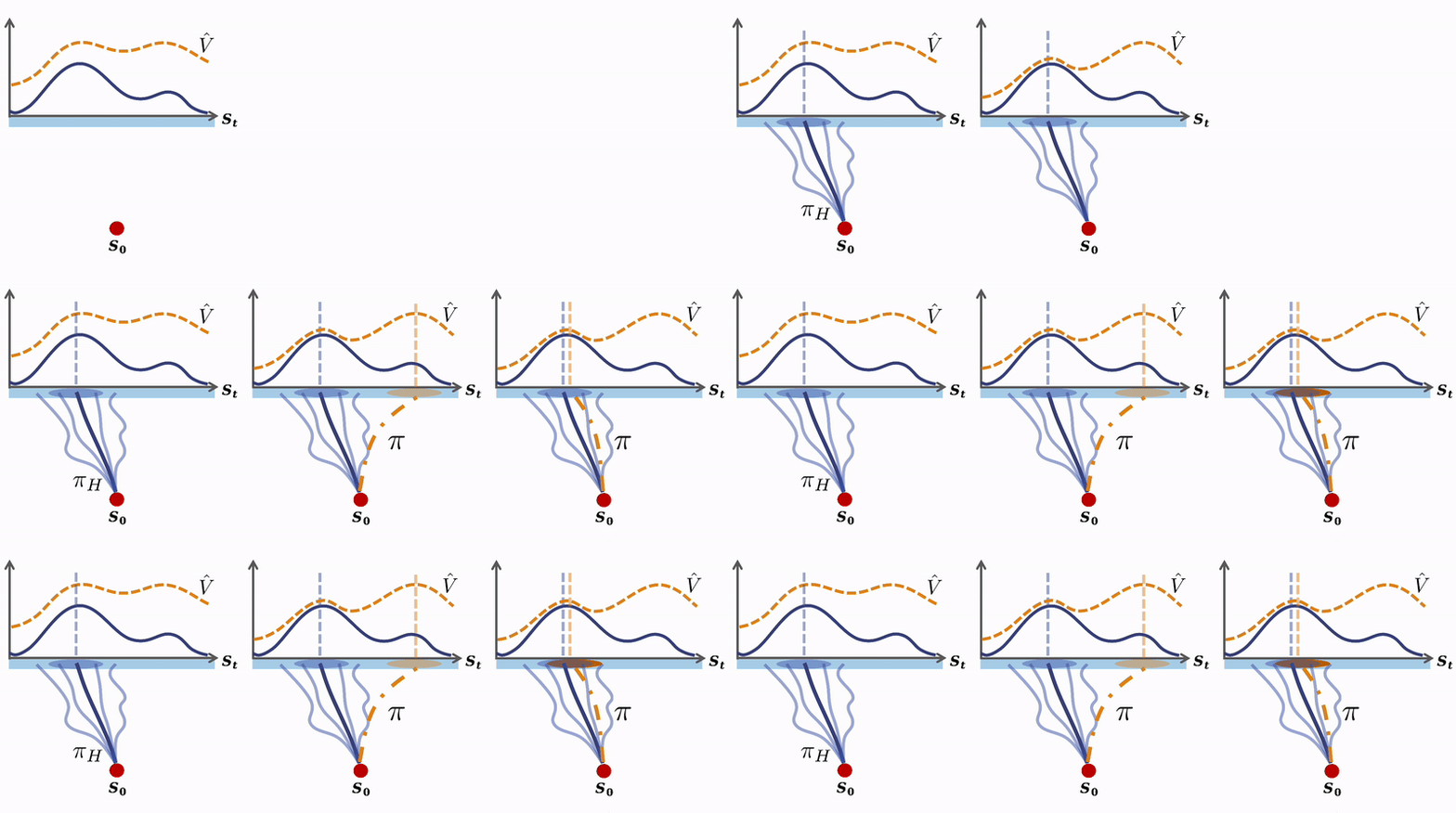
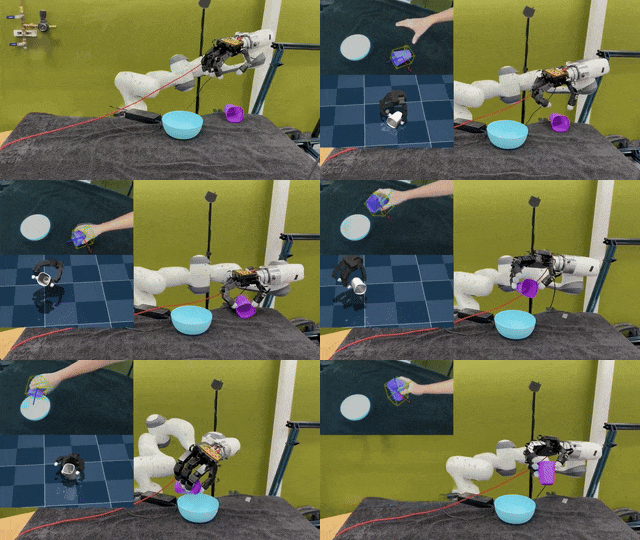
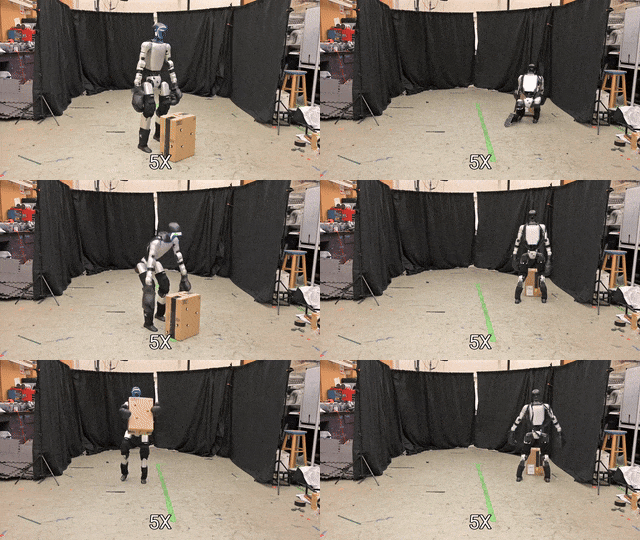
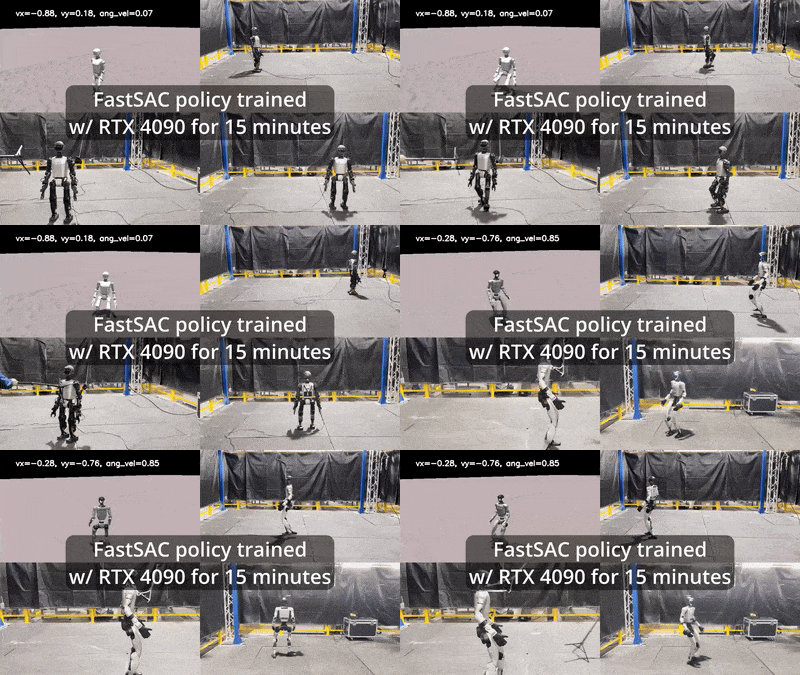
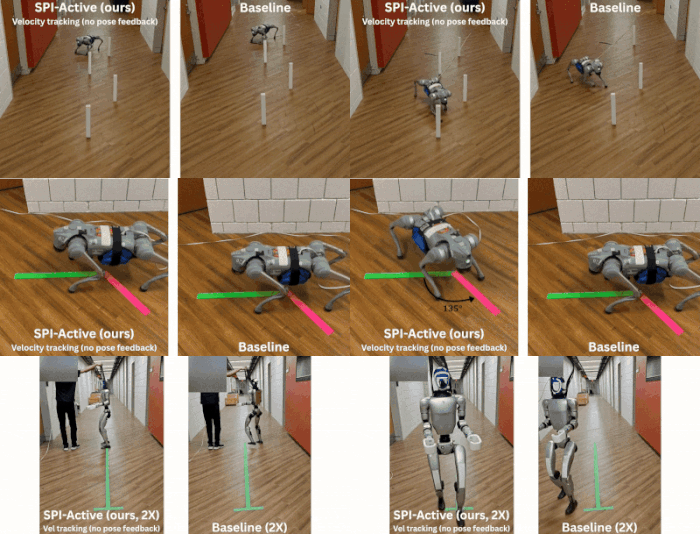
Sampling-Based System Identification with Active Exploration for Legged Robot Sim2Real Learning
Conference on Robot Learning (CoRL), 2025
(Oral Presentation)
TL;DR: SPI-Active is a general system ID tool based on parallel sampling-based optimization and active exploration, for legged sim2real learning.
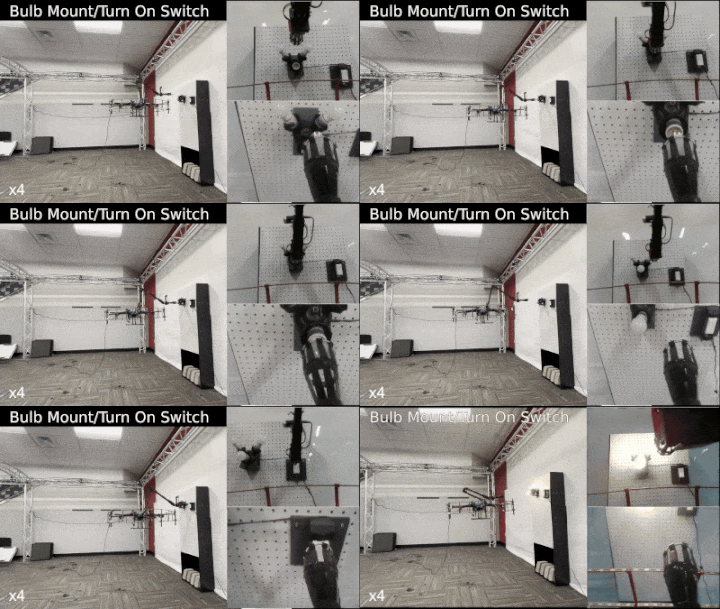
Flying Hand: End-Effector-Centric Framework for Versatile Aerial Manipulation Teleoperation and Policy Learning
Robotics: Science and Systems (RSS), 2025
TL;DR: A general-purpose aerial manipulation framework with an EE-centric interface that bridges whole-body control and policy learning.
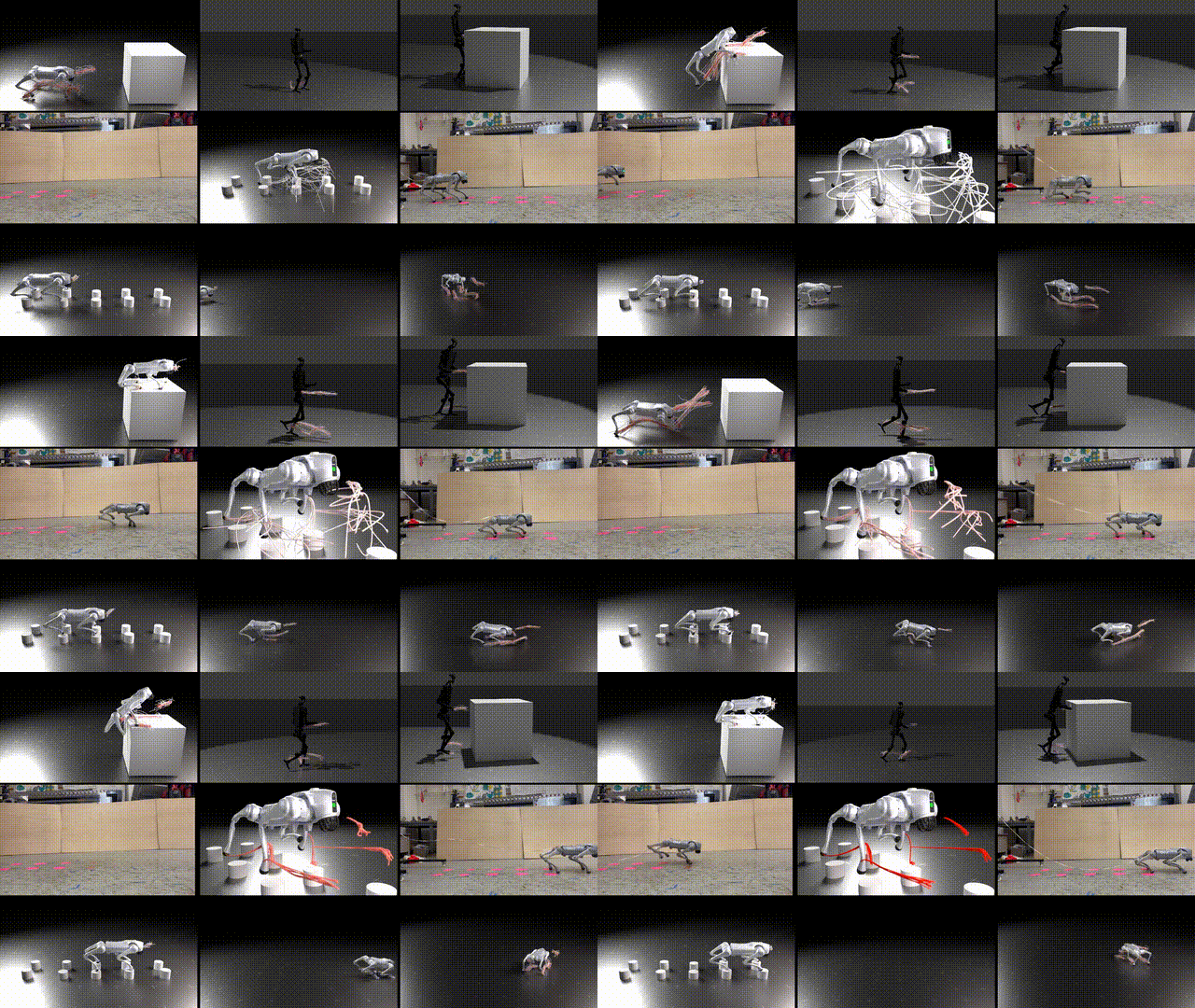
Full-Order Sampling-Based MPC for Torque-Level Locomotion Control via Diffusion-Style Annealing
International Conference on Robotics and Automation (ICRA), 2025
(Best Paper Award Finalist)
TL;DR: DIAL-MPC is the first training-free method achieving real-time whole-body torque control using full-order dynamics.
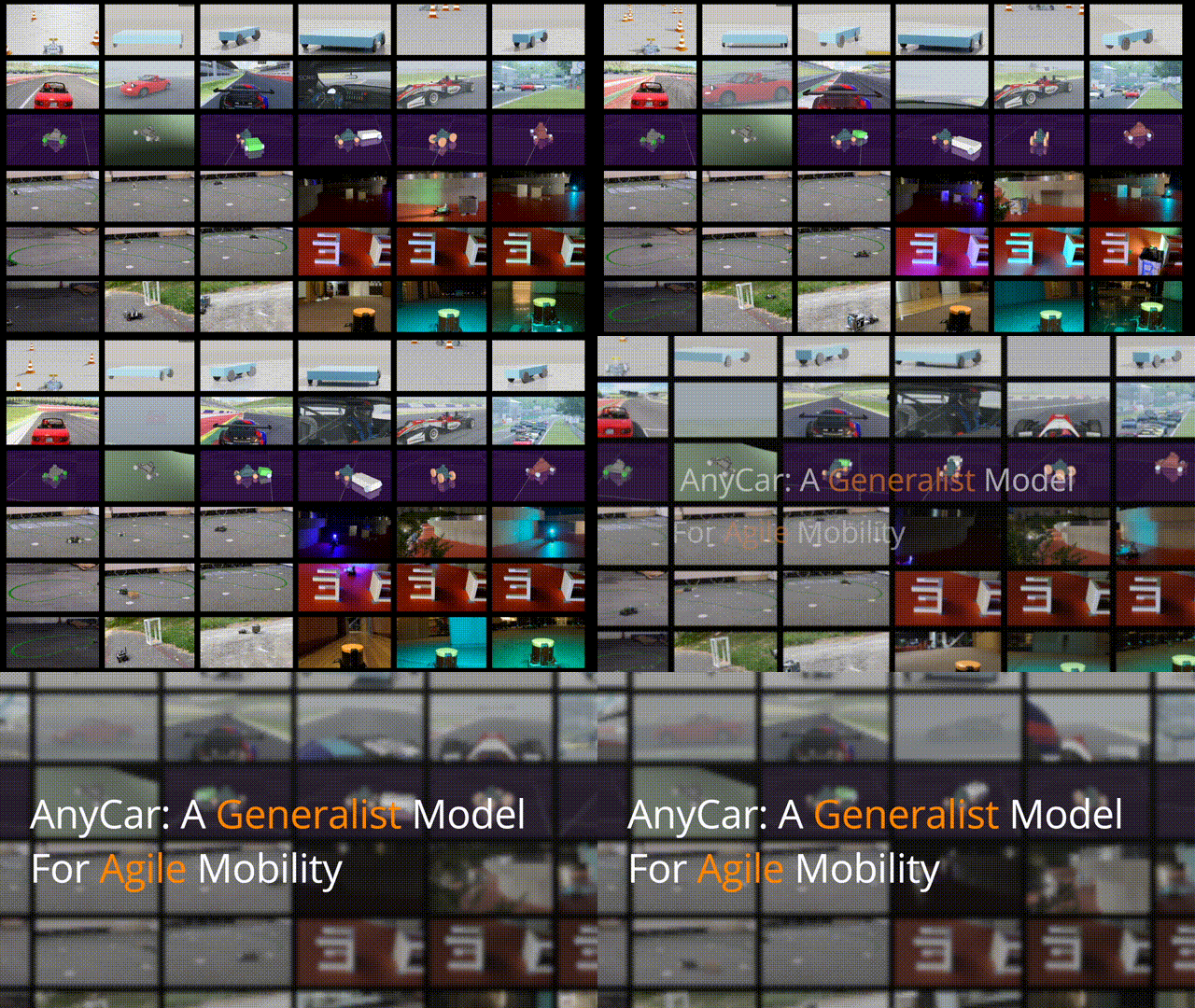
AnyCar to Anywhere: Learning Universal Dynamics Model for Agile and Adaptive Mobility
International Conference on Robotics and Automation (ICRA), 2025
paper website code IEEE Spectrum
TL;DR: AnyCar is a transformer-based dynamics model that can adapt to various vehicles, environments, state estimators, and tasks.
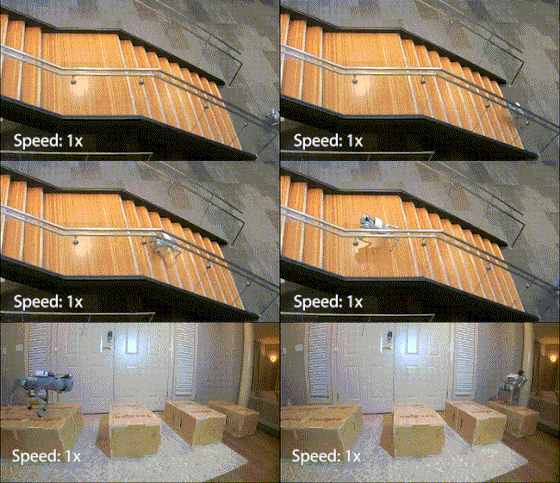
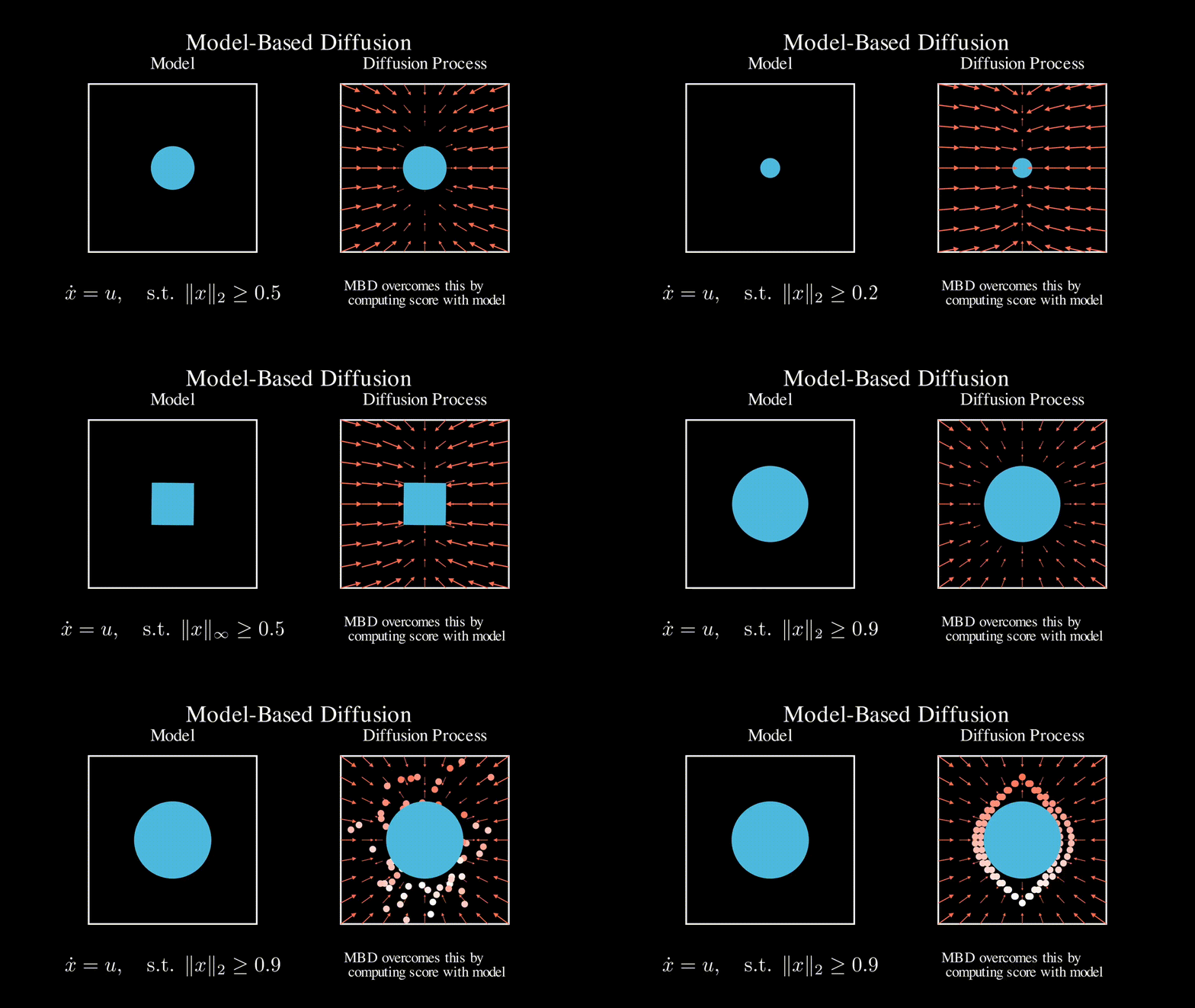
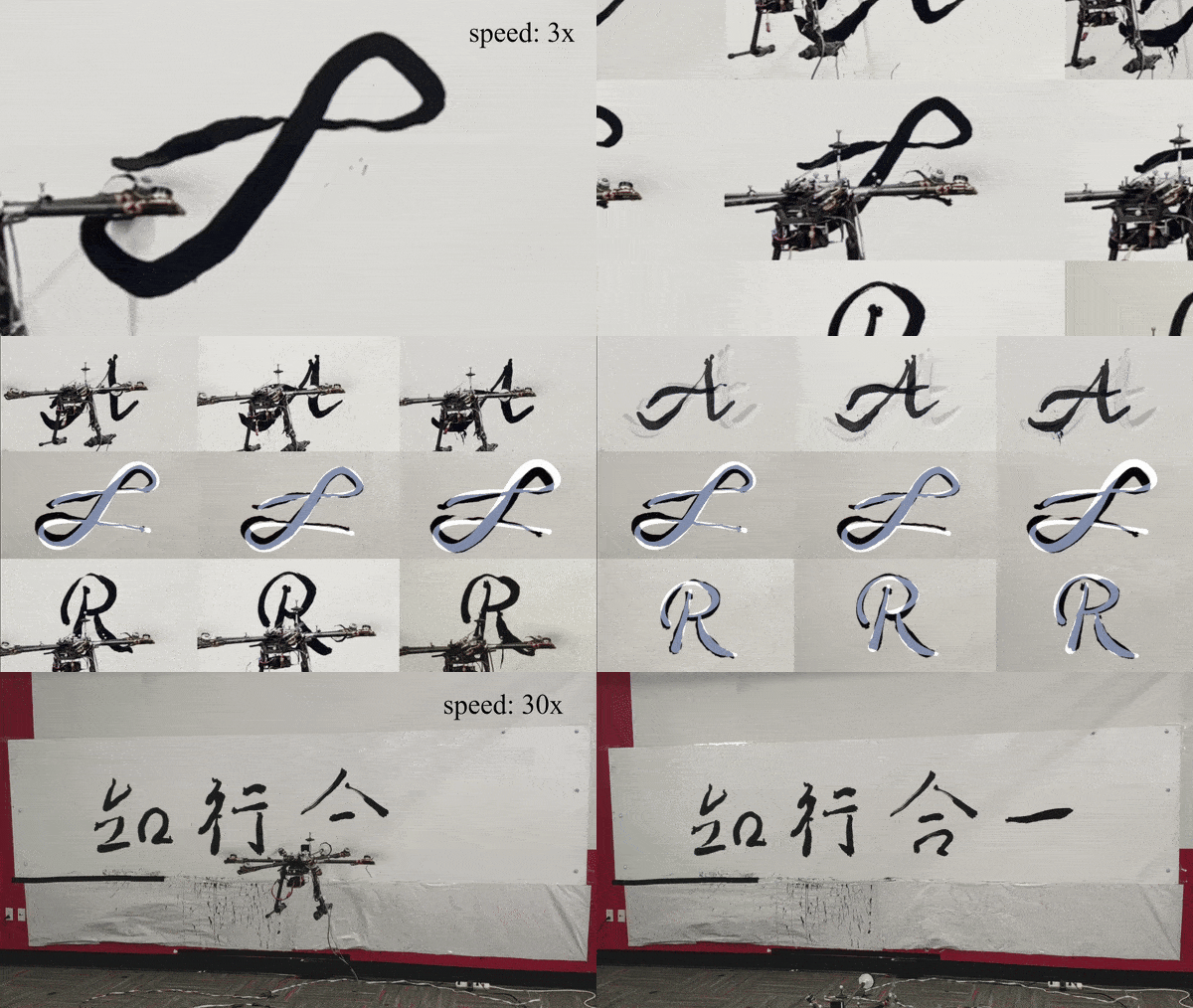
Flying Calligrapher: Contact-Aware Motion and Force Planning and Control for Aerial Manipulation
IEEE Robotics and Automation Letters (RA-L), 2024
TL;DR: Flying calligrapher enables precise hybrid motion and contact force control for an aerial manipulator in various drawing tasks.
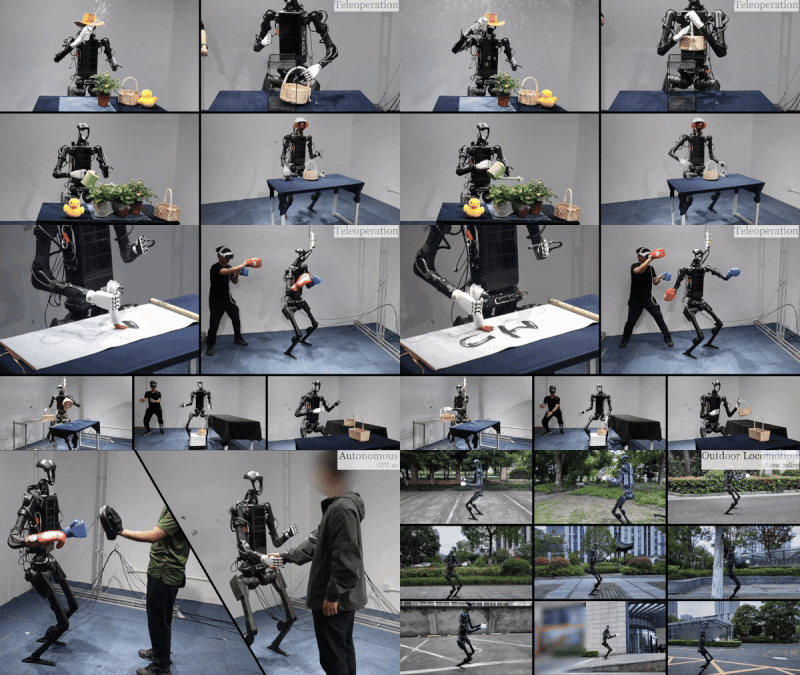
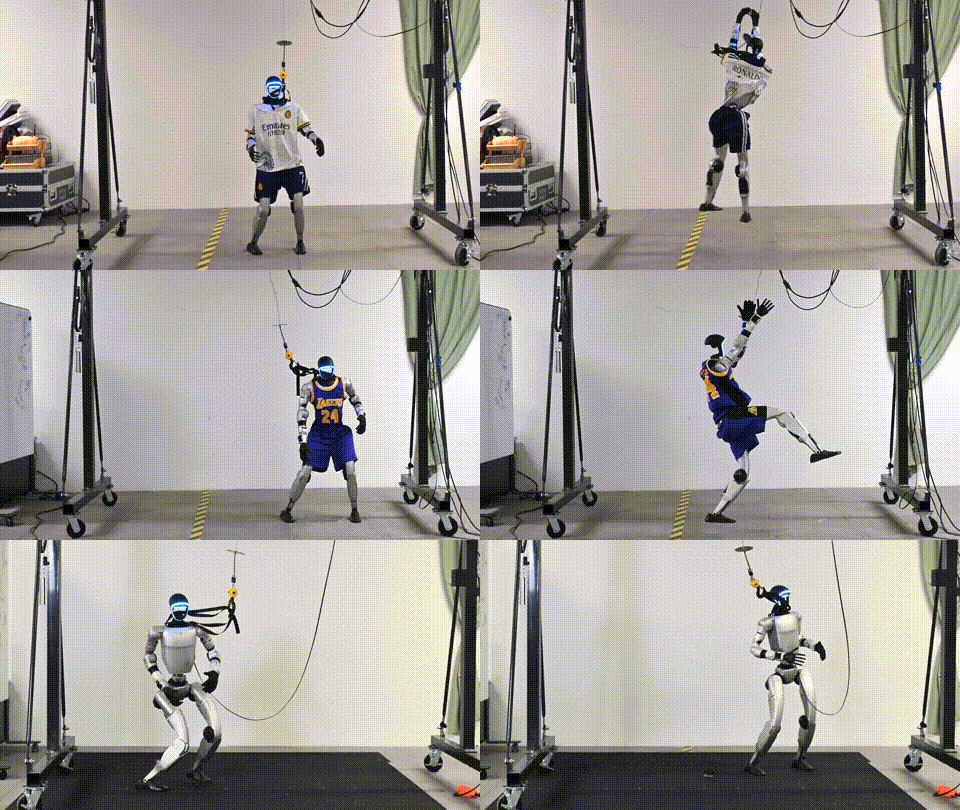
OmniH2O: Universal and Dexterous Human-to-Humanoid Whole-Body Teleoperation and Learning
Conference on Robot Learning (CoRL), 2024
paper website dataset code IEEE Spectrum
TL;DR: OmniH2O provides a universal whole-body humanoid control interface that enables diverse teleoperation and autonomy methods.
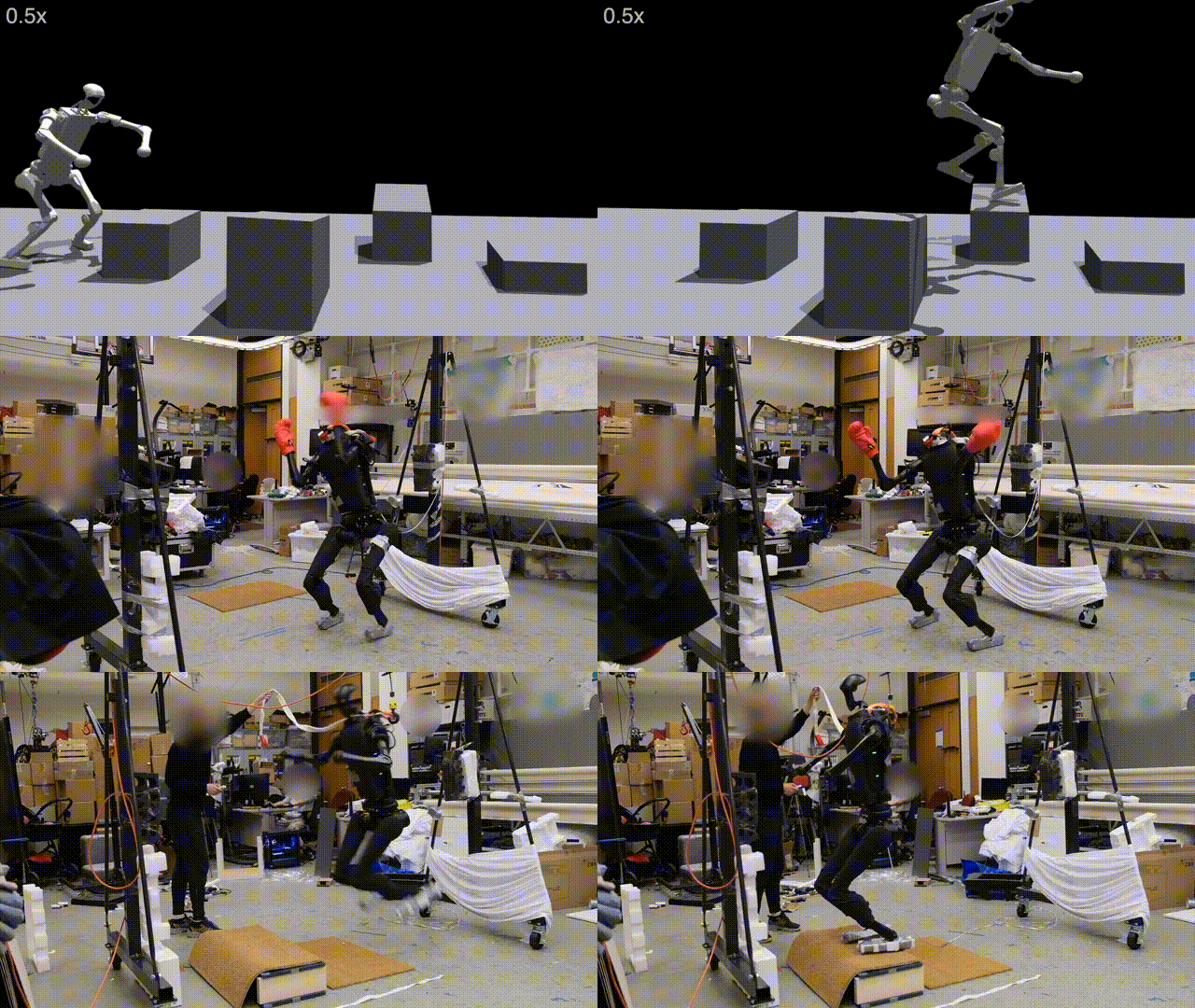
WoCoCo: Learning Whole-Body Humanoid Control with Sequential Contacts
Conference on Robot Learning (CoRL), 2024
(Oral Presentation)
TL;DR: WoCoCo is a task-agnostic skill learning framework without any motion priors, by decomposing long-horizon tasks into contact sequences.
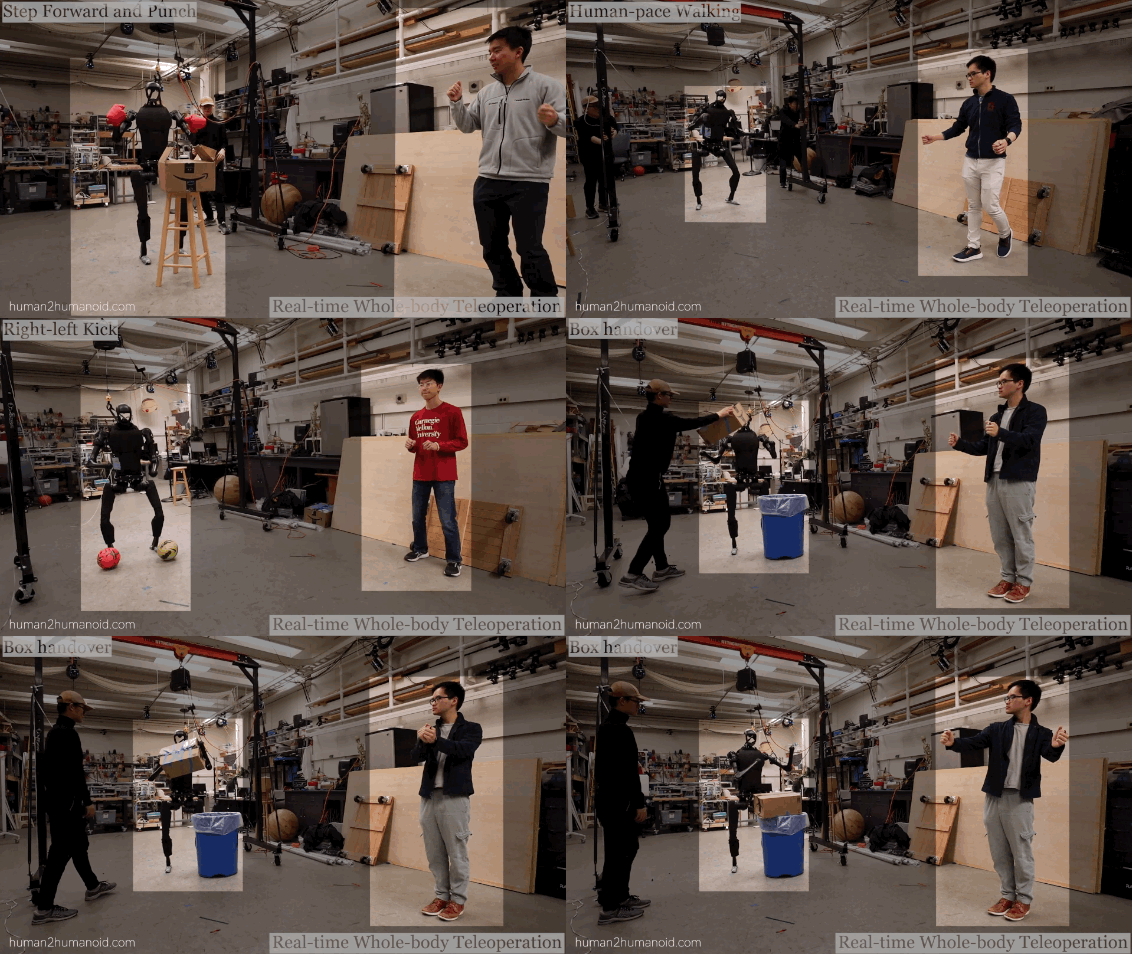
Learning Human-to-Humanoid Real-Time Whole-Body Teleoperation
International Conference on Intelligent Robots and Systems (IROS), 2024
(Oral Presentation)
paper website code IEEE Spectrum
TL;DR: H2O enables real-time whole-body teleoperation of a full-sized humanoid to perform tasks like pick and place, walking, kicking, boxing, etc.
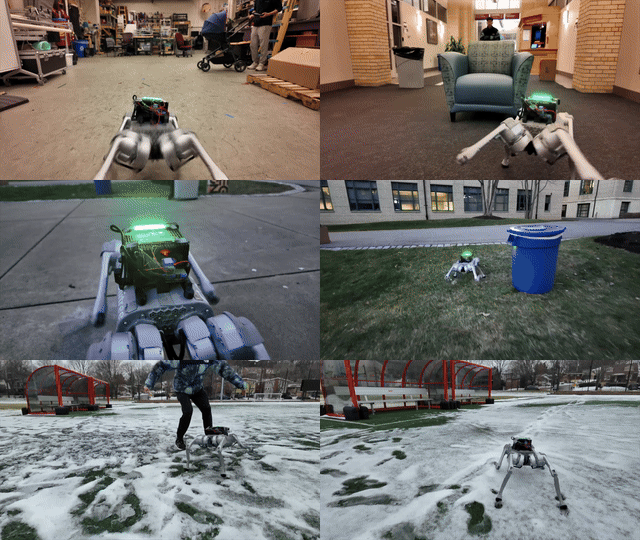
Agile But Safe: Learning Collision-Free High-Speed Legged Locomotion
Robotics: Science and Systems (RSS), 2024
(Outstanding Student Paper Award Finalist)
paper website code IEEE Spectrum CMU News
TL;DR: ABS enables fully onboard, agile (>3m/s), and collision-free locomotion for quadrupedal robots in cluttered environments.
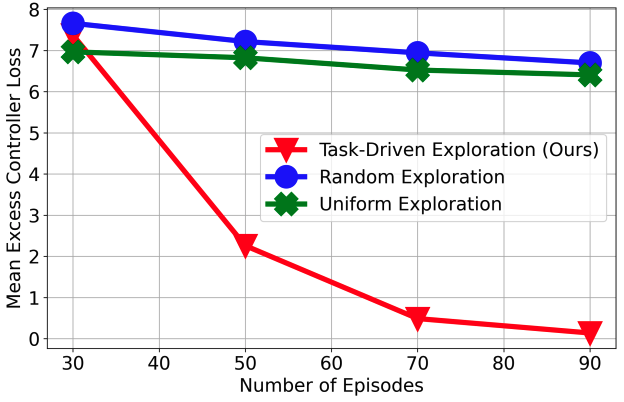
Optimal Exploration for Model-based RL in Nonlinear Systems
Neural Information Processing Systems (NeurIPS), 2023
(Spotlight, 3.1%)
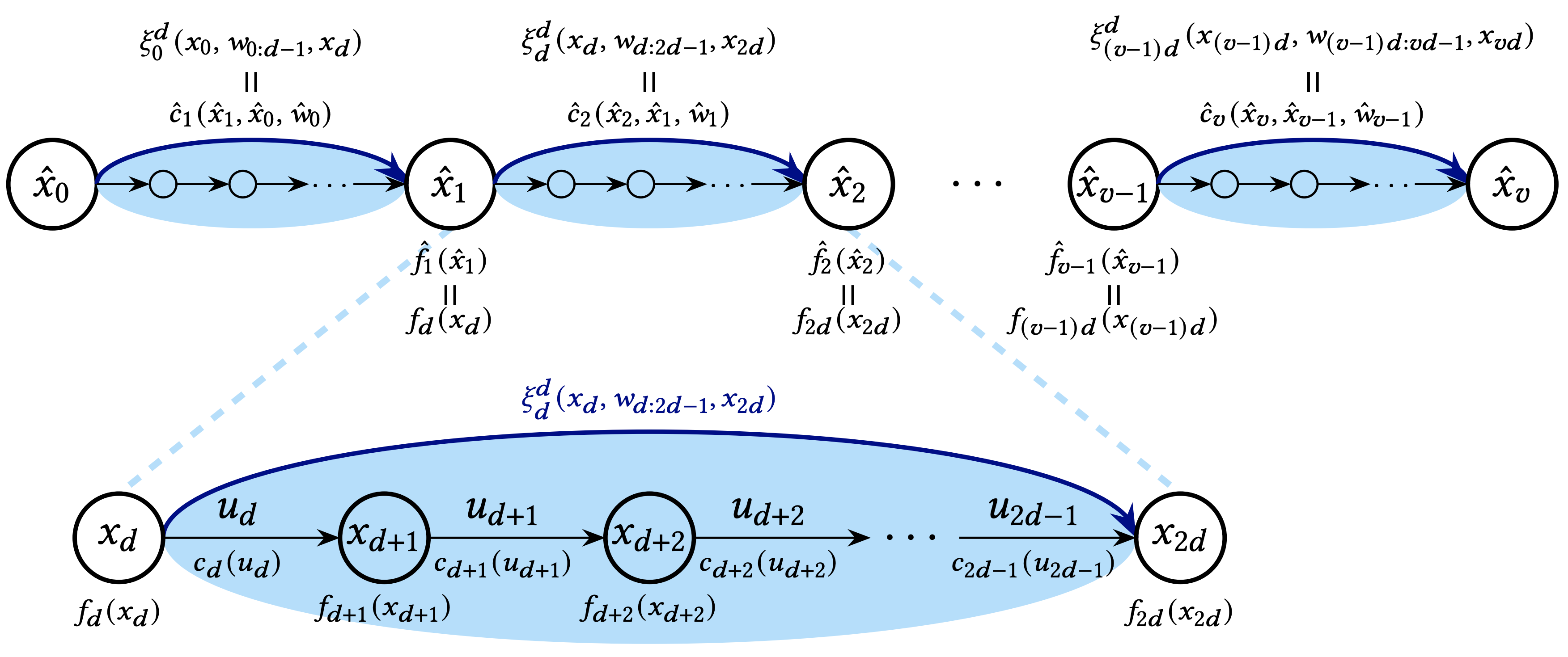
TL;DR: Not all model parameters are equally important. We develop an instance-optimal exploration algorithm for MBRL in nonlinear systems.
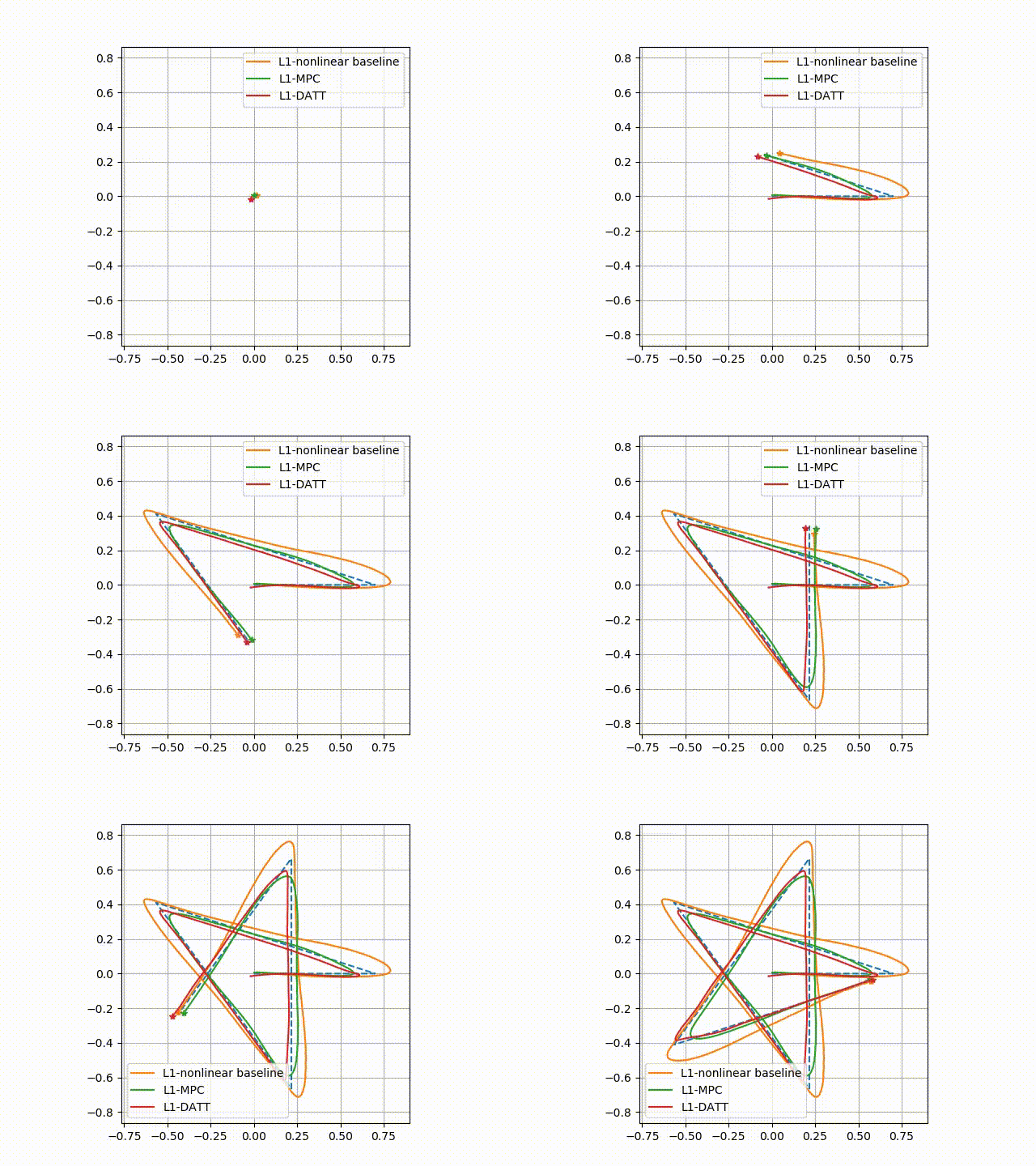

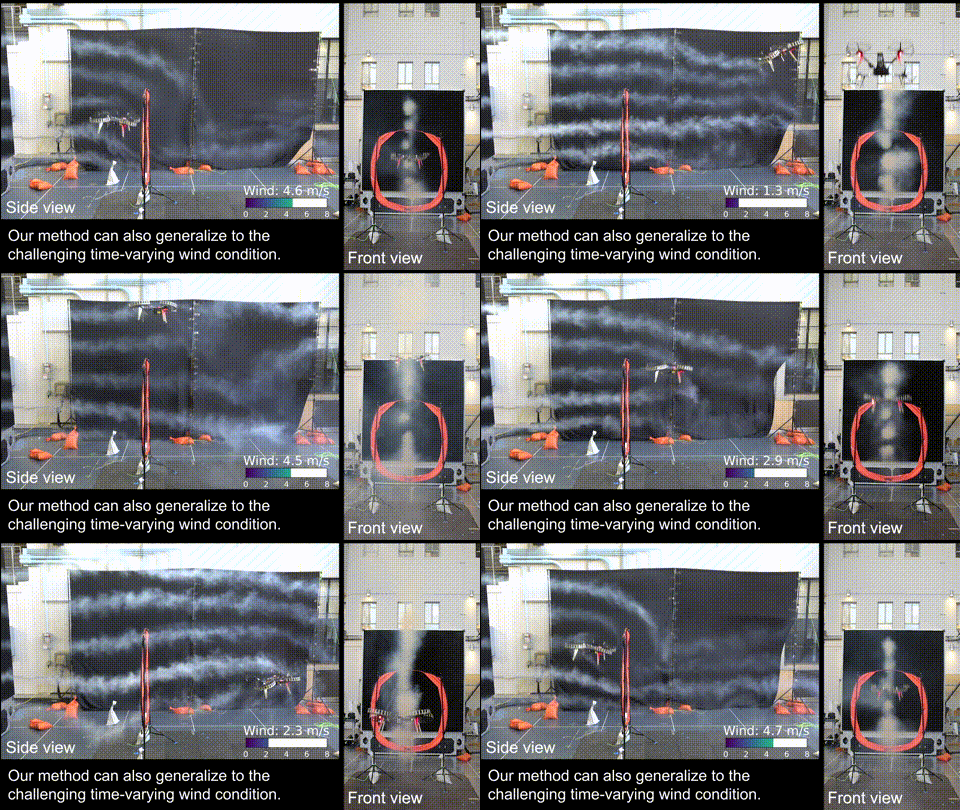
Neural-Swarm2: Planning and Control of Heterogeneous Multirotor Swarms Using Learned Interactions
IEEE Transactions on Robotics, 2022
paper video Caltech news Yahoo! news code
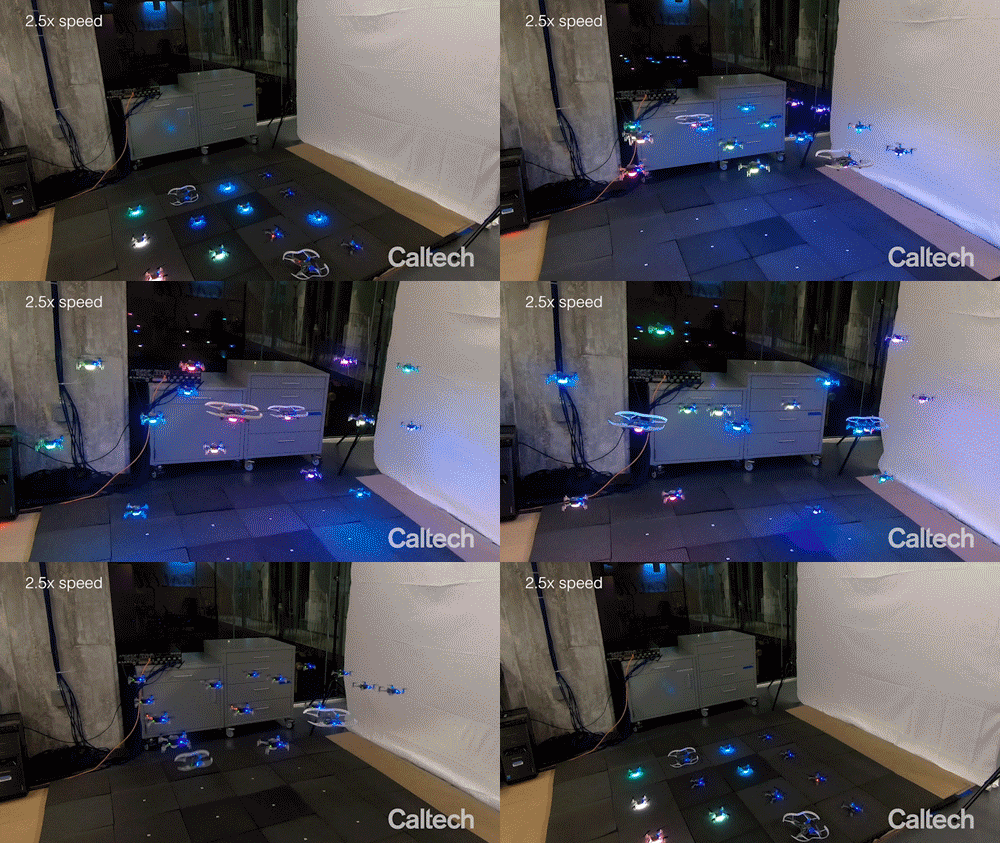
TL;DR: Neural-Swarm is a learning-based controller and planner for close-proximity flight of heterogeneous multirotor swarms.
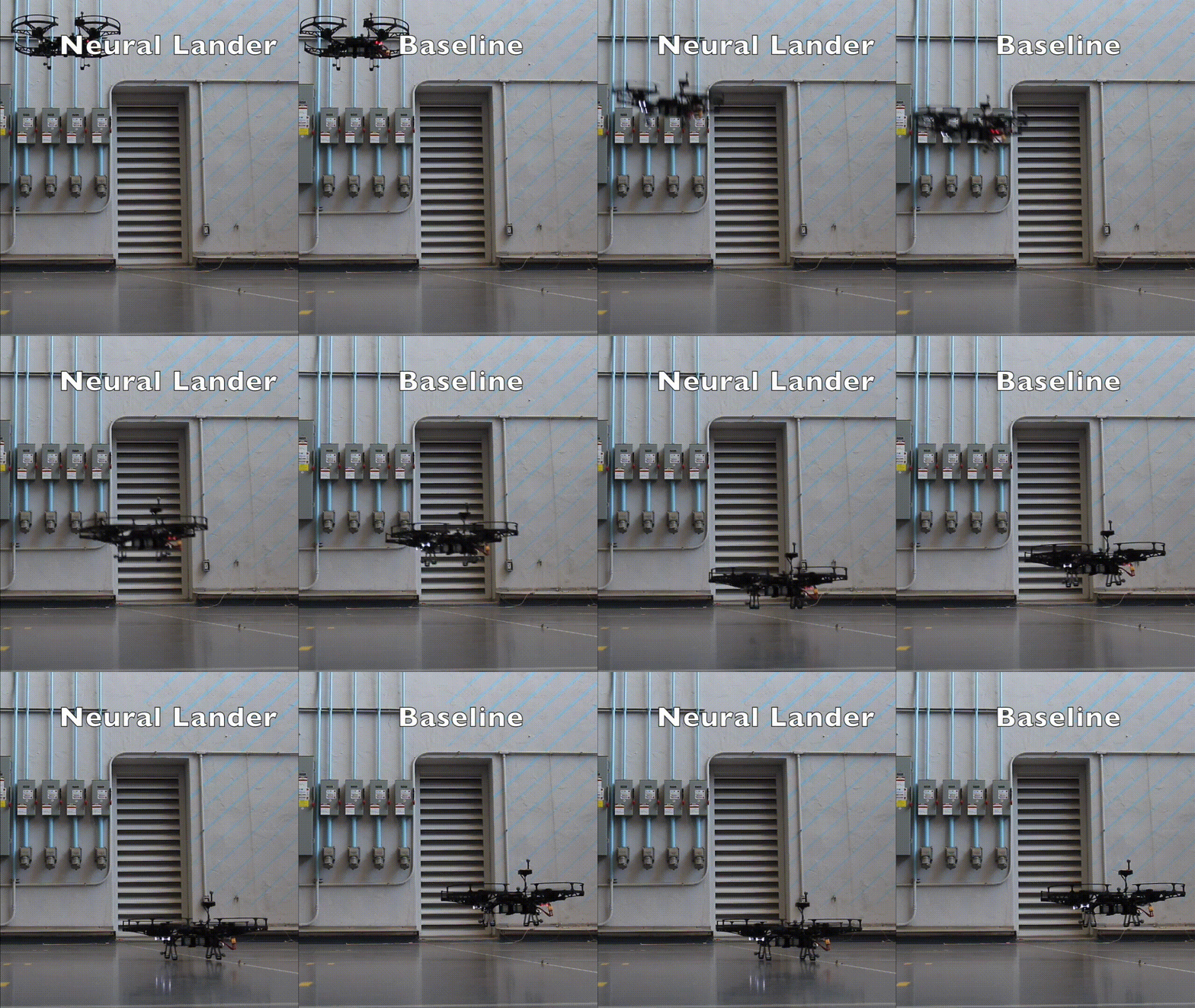
Neural Lander: Stable Drone Landing Control Using Learned Dynamics
International Conference on Robotics and Automation (ICRA), 2019
paper video Caltech homepage news code
TL;DR: Spectrally normalized deep learning and nonlinear control enable provably stable agile drone landing.